


Hiring Your First Employee in Kent: A Payroll, NIC and Pensions Checklist
Hiring your first employee is a milestone most Kent SME owners look forward to and most accountants quietly dread on their behalf. Not because the paperwork is hard, but because the cost is almost always higher than the gross salary number suggests, and a missed compliance step can turn a hire into a multi-thousand-pound headache.
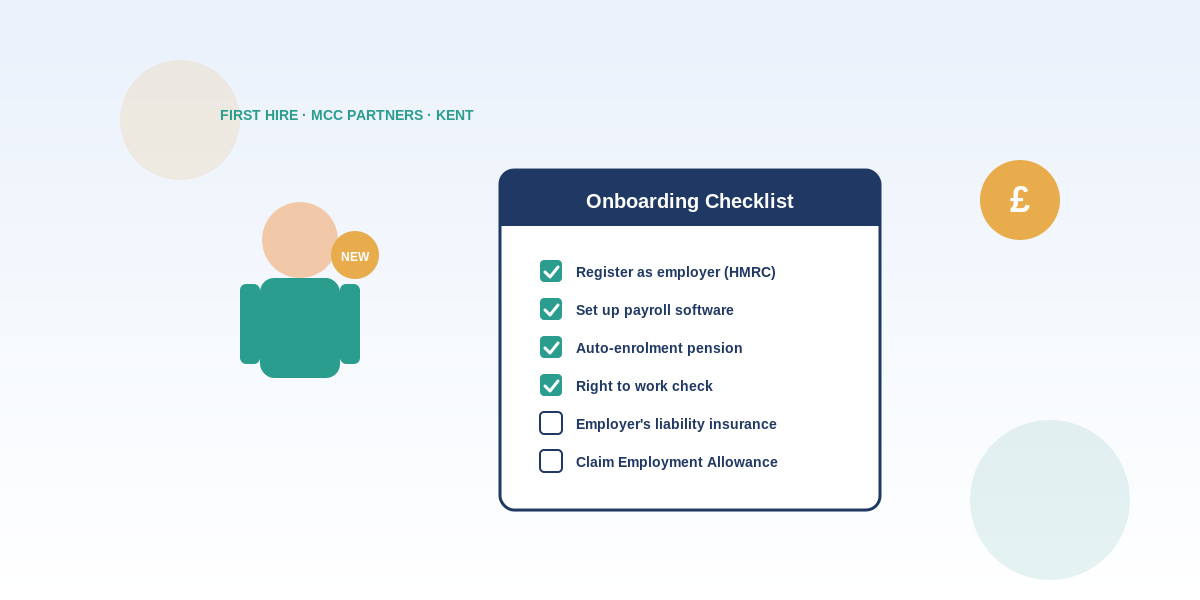
This is the checklist we walk first-time employers through across our Gravesend client base. The order matters: get steps 1 to 4 done before the new starter’s first day, and steps 5 to 8 in the first three months.
Step 1: Confirm the true cost of the hire
For a hire on £30,000 gross, the real cost to the company in 2026/27 is broadly:
- Salary: £30,000.
- Employer NIC at 15% on earnings above £5,000: about £3,750.
- Auto-enrolment pension at 3% employer contribution: £900.
- Employer’s liability insurance: £100 to £500 depending on industry.
- Equipment, software licences, recruitment fees: variable, but easy to underestimate.
Total realistic cost: closer to £35,000 than £30,000. Add holiday pay accrual, sick pay risk and management time, and a sensible budget for the first year of any £30k hire is around £36,000–£38,000.
Step 2: Register as an employer with HMRC
You need to register as an employer up to four weeks before the first payday, but no earlier. Registration is online via gov.uk and takes around 15 minutes. HMRC issues your PAYE reference and Accounts Office reference, which your payroll software will need.
One trap: if your company is brand new and has had no payroll activity, you cannot register too early — HMRC will tell you to come back closer to the first payday. Time it about 10 days out.
Step 3: Pick payroll software
You have three realistic options:
- HMRC’s free Basic PAYE Tools, which is functional but minimal and only suits very small employers.
- Mainstream cloud payroll: BrightPay, Xero Payroll, Sage 50 Payroll, Moneysoft. Typically £5–£20 a month for a small employer.
- Outsourcing payroll to your accountant, which is what most of our Kent clients choose. You send us starter and leaver details and any variable pay each month, and we handle everything else.
Whichever route you take, it must be MTD-compatible and able to file Real Time Information (RTI) submissions to HMRC.
Step 4: Set up auto-enrolment pension
Auto-enrolment applies the moment you have at least one employee earning over £192 a week (the lower earnings trigger). You must set up a qualifying workplace pension scheme — NEST is the default free option; The People’s Pension and Smart Pension are common alternatives.
Minimum contributions in 2026/27 are 8% of qualifying earnings, split 5% employee and 3% employer. You have a duty to assess every new employee on their first payday and either auto-enrol them or, if they fall below the threshold, give them the right to opt in. The Pensions Regulator audits these duties — missing them is not optional and the penalties are blunt.
Step 5: Get the contract and the legal paperwork right
By law, every employee must receive a written statement of employment particulars on or before their first day. This is more than a contract — it covers pay, hours, holiday, sick pay, notice and disciplinary procedures.
You also need to:
- Check the right to work in the UK (passport, BRP or share code — keep a dated copy).
- Issue a P45 starter checklist on the first day if no P45 is provided.
- Take out employer’s liability insurance (statutory minimum £5 million).
- Display the certificate where employees can see it, or keep an electronic copy accessible.
Step 6: Claim the Employment Allowance
The Employment Allowance lets eligible employers reduce their employer NIC bill by up to £5,000 a year. To qualify, your employer NIC liability in the previous tax year must have been below £100,000, and you must employ at least one person other than the director.
For a Kent SME hiring its first non-director employee, this is a real saving: claim it from your first payroll month, not at year-end. Most payroll software has a tick-box; HMRC defaults to assuming you are not claiming.
Step 7: Build a sensible HR baseline
You do not need a 40-page handbook on day one, but you do need:
- A simple holiday-tracking system (cloud HR tools start around £5 per employee per month).
- A clear sickness reporting process.
- A way to keep an audit trail of contracts, right-to-work documents and any disciplinary correspondence.
- An informal probation period — usually three months — with a documented review at the end.
Step 8: Get the cash flow right
The salary, PAYE/NIC and pension contributions land on different dates and from different bank accounts. A typical small employer pays:
- Net salary to the employee on payday.
- PAYE and employee/employer NIC to HMRC by the 22nd of the following month.
- Pension contributions to the provider by the 22nd of the following month.
It is easy to under-budget cash by treating the gross salary as the only commitment. Build the full monthly cost into your forecast and standing-order discipline from day one.
How MCC Partners handles first hires
For our Kent SME clients hiring their first employee, we run a single onboarding session that covers HMRC registration, payroll setup, pension scheme choice, contract review and the first payroll month. The aim is to make the first payslip a non-event so you can focus on integrating the new person, not chasing paperwork.
Accountancy, Tax, Law, and so much more Stay Informed!
Subscribe to our Newsletter
