


The SME Cash Flow Survival Guide: 7 Tactics That Actually Work in 2026
Most SMEs do not fail because they are unprofitable. They fail because they run out of cash. That has always been true, but the combination of higher payroll costs, longer payment terms and a slower lending environment has made cash flow management the single biggest determinant of which of our SME clients across Gravesend and Kent are thriving in 2026 and which are simply surviving.
The good news is that cash flow problems are almost always visible months before they become critical. Below are the seven tactics we coach SME owners through in our advisory work. None of them is glamorous, but each one moves the needle.
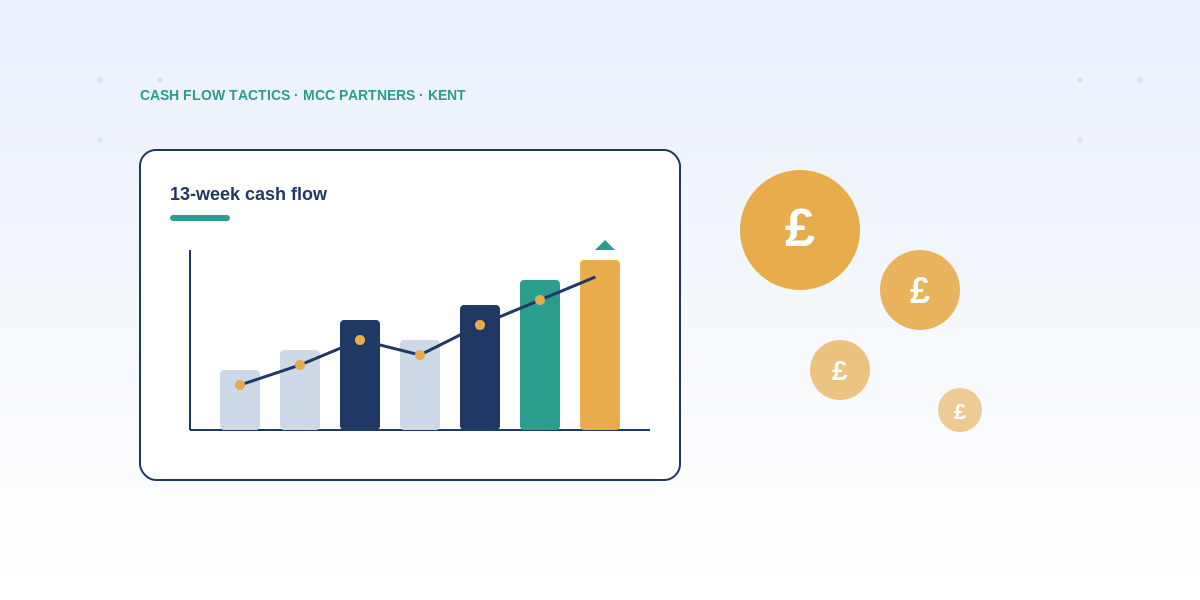
1. Run a rolling 13-week cash flow forecast
The annual budget is for the bank. The rolling 13-week cash flow forecast is for you.
Thirteen weeks is long enough to spot trouble and short enough to act. Update the model every Monday morning with last week’s actuals, refresh receipts and payments expected over the next quarter, and look at the weekly closing balance. If it dips below your minimum operating buffer, you have eight weeks to do something about it instead of eight days.
Most of our clients use a simple spreadsheet for this, or a tool like Float or Fluidly. The software matters less than the discipline of updating it every week.
2. Tighten invoicing the day you ship the work
The fastest cash-flow improvement most SMEs can make has nothing to do with finance. It is invoicing on the day the work is delivered, not at the end of the month.
If your average debtor days is 45, billing two weeks earlier shaves 14 days off your cash conversion cycle. On a business turning over £1.2 million a year, that is around £46,000 of working capital released. The change costs nothing and takes one operations meeting to put in place.
3. Get serious about late payments
The Late Payment of Commercial Debts (Interest) Act 1998 still applies. You are entitled to charge interest at 8% above the Bank of England base rate plus a fixed compensation amount per invoice. We very rarely see SMEs use it.
You do not have to fall out with customers to chase faster. A polite but firm process works better than escalation: a reminder seven days before due, a friendly call on the day, and a formal letter quoting the Act at day fourteen. Customers who pay you faster after a single reminder are not your problem. The ones who string you out for three months are, and the Act exists for them.
4. Match payment terms to your real working capital
Standard 30-day terms with customers and 30-day terms with suppliers sounds neutral, but it is not. If you are paying your team weekly, holding stock for 20 days and waiting 35 days to be paid, you have a permanent funding gap.
The fix is to negotiate terms that reflect your actual cash cycle. That might mean asking new customers for 25% upfront, moving repeat customers to direct debit, or stretching certain non-strategic suppliers to 45 days. Be deliberate, not opportunistic.
5. Reframe stock and work-in-progress as cash
If you make or hold physical product, every unsold item on the shelf is cash you have already spent. The same applies to half-finished projects, billable hours that have not been invoiced, and consultancy work-in-progress.
Two practical steps:
- Set a maximum days-of-stock figure for each SKU and review it monthly.
- For service businesses, bill WIP at month-end as standard, not just at project completion.
Most SMEs that take stock and WIP seriously release between 8% and 15% of their turnover in trapped cash within six months. That is meaningful funding without taking on a single pound of debt.
6. Build a working capital facility you do not need
Banks lend most easily to businesses that look like they do not need the money. Setting up a modest overdraft or invoice finance facility when trading is healthy gives you an option, not an obligation. When something goes wrong, the option is invaluable.
In 2026, the lending environment is steadier than it was during the rate hike cycle, but appetite is still selective. Putting a facility in place now, with up-to-date management accounts and clean numbers, is a more pleasant experience than scrambling for it in October.
7. Hold a monthly cash flow meeting that actually decides things
The single change that separates SMEs with strong cash flow from those who lurch from month to month is whether they hold a structured cash review every month.
The agenda is short:
- Last month’s actuals versus forecast, in cash terms.
- Top five debtors and their status.
- Any commitments over £5,000 in the next 30 days.
- Two decisions: anything to chase harder, anything to defer.
Forty-five minutes, every month, with the owner and whoever runs finance. That is the meeting. It will pay for itself in the first quarter.
What we see when SMEs do this well
Clients who adopt even four of these seven tactics typically reduce their average debtor days by 8 to 12 within a quarter, free up between 5% and 10% of turnover in working capital within six months, and report a noticeable drop in the financial anxiety that comes with running a small business. The numbers are real, but the cultural shift is bigger.
Cash flow management is not an accounting exercise. It is a leadership habit. Done well, it gives you the confidence to invest, hire and price without flinching.
Accountancy, Tax, Law, and so much more Stay Informed!
Subscribe to our Newsletter
