Corporation Tax Late Filing Penalties Have Doubled, and the Notices Have Started Again
Two things happened this year that most company directors haven’t connected yet, and together they make an unpleasant surprise.
First, the fixed penalties for filing a company tax return late doubled from 1 April 2026.
Second, HMRC paused issuing late filing penalty notices while it worked on its systems, and has now started sending them again. So the notices landing on doormats this autumn include returns that were late months ago. People had assumed they had got away with it. They hadn’t.
The new penalty amounts
Here is what it costs now, for returns with a filing date on or after 1 April 2026.
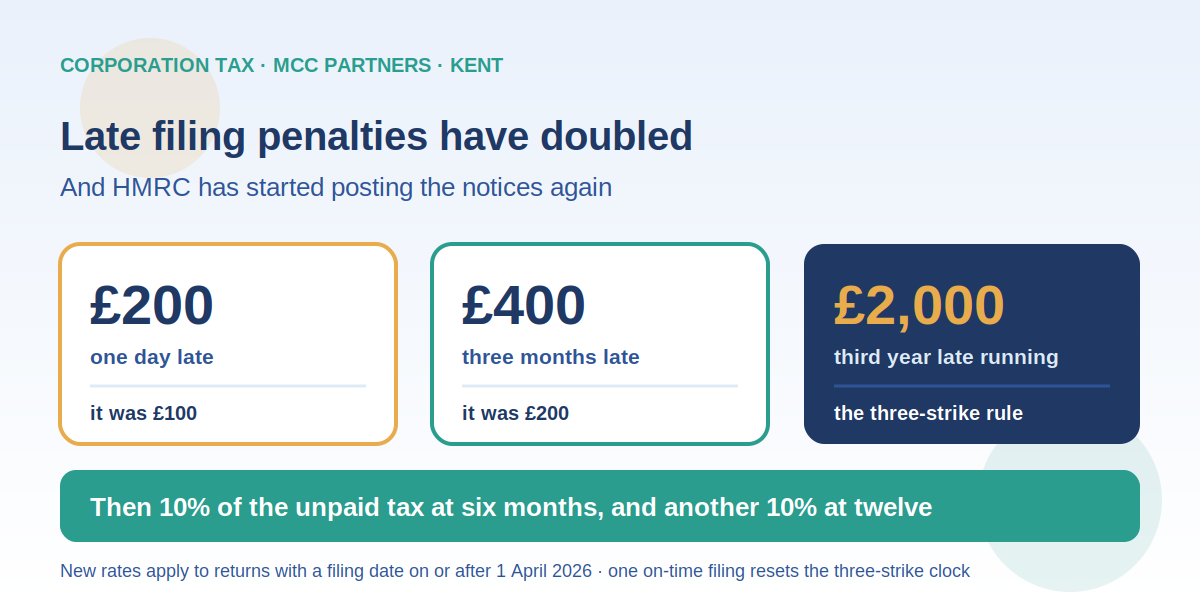
- One day late: £200 (it was £100)
- Three months late: a further £200, so £400 in total (it was £200)
- Six months late: a tax-geared penalty of 10% of the unpaid corporation tax
- Twelve months late: another 10%, so 20% of the unpaid tax on top of the fixed penalties
The fixed amounts look small. The tax-geared ones don’t. On a company with £40,000 of unpaid corporation tax, a return that drifts past twelve months costs £8,000 in tax-geared penalties before you have paid a penny of the tax itself.
The three-strike rule, which is where it really bites
This is the part I’d want every director to know.
If you file late for three accounting periods in a row, the penalties for that third period jump again.
- Third consecutive late return, one day late: £1,000 (it was £500)
- Third consecutive late return, over three months late: £2,000 (it was £1,000)
And it stays at that level for every year afterwards until you file one on time. A single on-time filing resets the clock back to the standard rates.
So a company that has quietly been a few weeks late for three years, which is more common than you’d think and usually because the records arrive late rather than through any real neglect, is now looking at £2,000 instead of the £200 it would have been under the old regime for a first offence. That is a tenfold difference for the same behaviour.
The deadline people get wrong
There are two separate corporation tax deadlines and they are nine months apart in a way that confuses almost everybody.
You have to pay the corporation tax nine months and one day after your accounting period ends.
You have to file the return twelve months after your accounting period ends.
Which means the money is due three months before the paperwork is. Interest starts running from the payment date, not the filing date, so a company that files at eleven months and pays at the same time has been accruing interest for two months without knowing it. No penalty, but a real cost.
For a 31 March year end, that is tax due by 1 January and the return due by 31 March the following year. Write both in the diary, not just the second one.
What to do if a notice turns up
Three steps, in this order.
1. Check it is actually right
HMRC penalty notices are automatic and they are not always correct. The common ones I see are penalties raised against a dormant company that never needed to file, penalties for a period the company had already told HMRC it wasn’t trading in, and duplicate notices where an accounting period has been split into two returns and HMRC has only matched one.
If the return genuinely went in on time, you need the submission receipt. Get it from whoever filed it before you do anything else.
2. File the outstanding return, today
Whatever else happens, the penalties keep escalating while the return is outstanding. The three-month, six-month and twelve-month charges are all sitting there waiting. Stopping the clock is worth more than winning the argument.
3. Appeal if you have a reasonable excuse
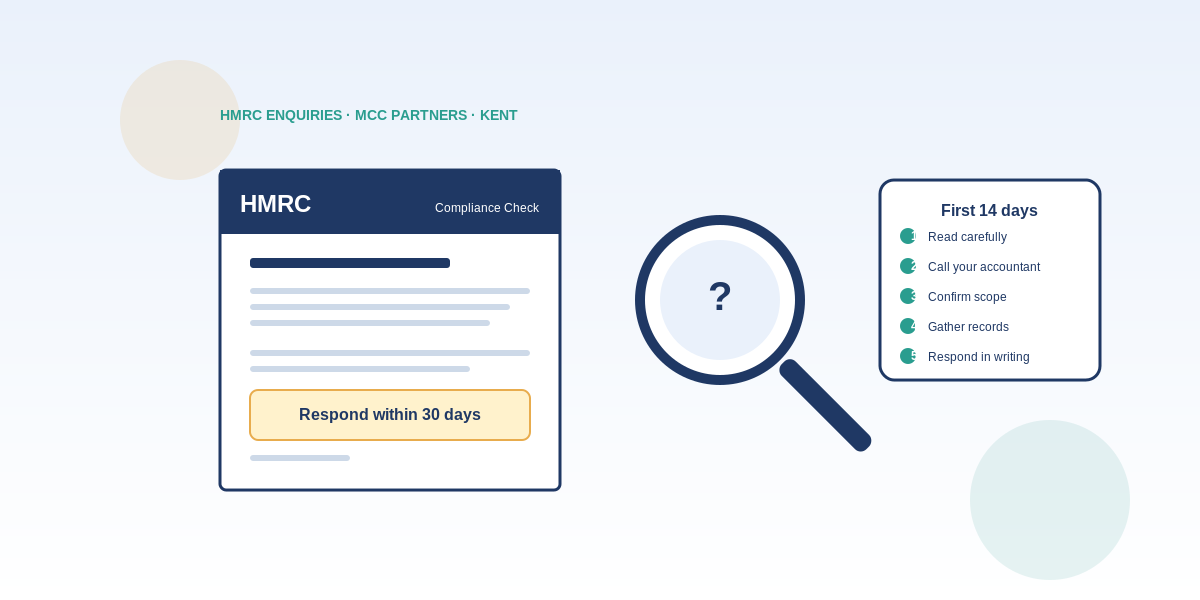
You have 30 days from the date of the notice. “Reasonable excuse” is a real test with a real meaning, and it is narrower than people hope. Serious illness, a bereavement, a fire or flood, or an HMRC service failure will generally be accepted. Being busy will not. Nor will your accountant being busy, which I say as an accountant.
What does sometimes work, and is worth asking for separately from an appeal, is time to pay. HMRC is a good deal more reasonable about payment arrangements than its letters suggest, but you have to ask before it escalates.
The honest advice
The cheapest way to deal with corporation tax penalties is not to deal with them.
Almost every late return I have seen in twenty years came from the same place, which is records that arrived at the accountant too late for the accountant to do anything about it. Not fraud, not avoidance, just a box of receipts in December for a year that ended in March.
If you get your records to us within three months of your year end, the return is filed early, you know your tax bill nine months before you have to pay it, and you have time to actually do something about it. That last bit is the whole point. A tax bill you find out about in January is a bill. A tax bill you find out about in July is a plan.
And with the three-strike rule now in force, a pattern of lateness is more expensive than it has ever been. If you have been late two years running, this is the year to break it.
Accountancy, Tax, Law, and so much more Stay Informed!
Subscribe to our Newsletter