Got Your First MTD Update Wrong? The November One Fixes It
A fortnight ago I wrote about the first MTD quarterly update and the people who missed it.
Since then I’ve had a run of the same question, and it isn’t the one I expected.
It isn’t “what happens if I was late”. It’s “I filed it, but I don’t think the figures were right, and now what?”
The answer is better than most people assume. You do nothing special. The next update sorts it out on its own.
Quarterly updates are cumulative
This is the bit nobody explains properly, and it changes how you should think about the whole thing.
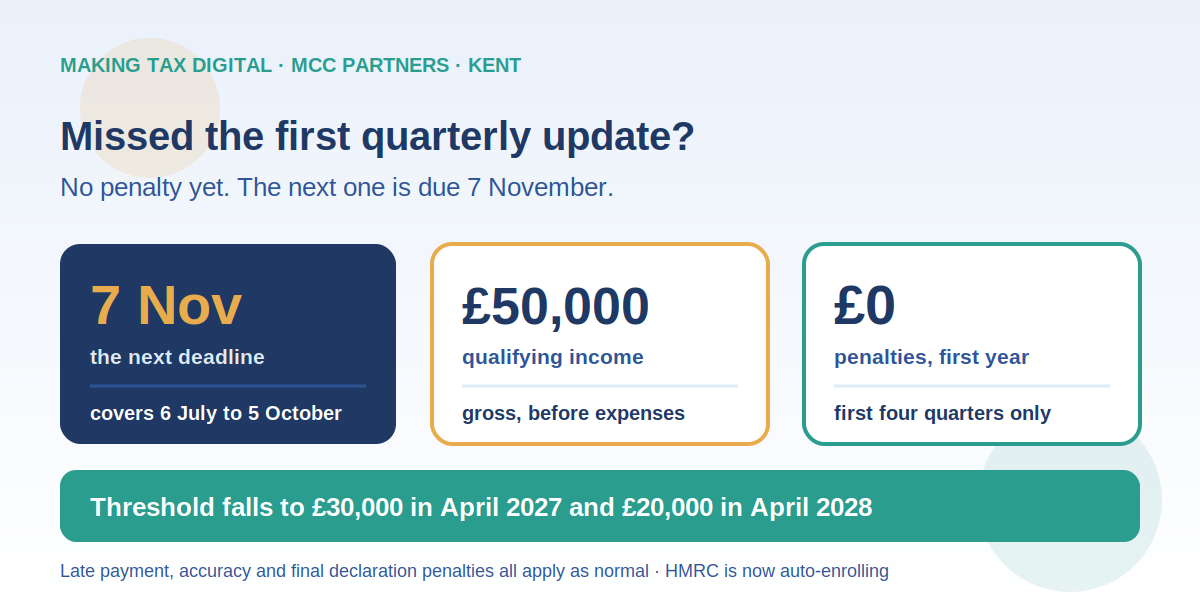
Your second update is due on Saturday 7 November 2026. People assume it covers 6 July to 5 October, that quarter on its own, like a little VAT return.
It doesn’t. It restates the whole year to date, 6 April to 5 October.
Every update you send replaces the running totals rather than adding to them. The fourth one, back in May, will carry the full twelve months.
So a mistake in August corrects itself
If you missed a pile of expenses in the first update, or put a rental receipt in the wrong category, you fix it in your records now.
November then goes to HMRC with the corrected year-to-date figures, and the earlier error is simply gone.
No amendment. No correction form. No phone call. It washes through.
I’ve spoken to three people in the last fortnight who were bracing themselves to unpick a bad August submission. None of them needed to.
What this means in practice
Two things follow from it, and the second one matters more than the first.
The first is that you can stop worrying about the August figures in isolation. They were a snapshot. They have already been superseded once you file in November.
The second is the one people miss. If your bookkeeping is wrong, every update carries the error forward, not just the one you got wrong.
A cumulative system is forgiving about a one-off slip. It is completely unforgiving about records that are quietly wrong all year, because the same mistake gets resubmitted four times and then lands in your tax return.
So the thing to fix is never the submission. It is the bookkeeping behind it.
The deadline still matters
I said a fortnight ago that there are no late submission penalty points on the first four quarters, and that is still true.
But cumulative updates make the soft landing less useful than it sounds.
If you skip November, you haven’t deferred one quarter of work. You have left six months of records unreconciled, and you’ll be doing all of it in February under more pressure, with the January tax return season on top.
Filing on time is mostly a favour to yourself.
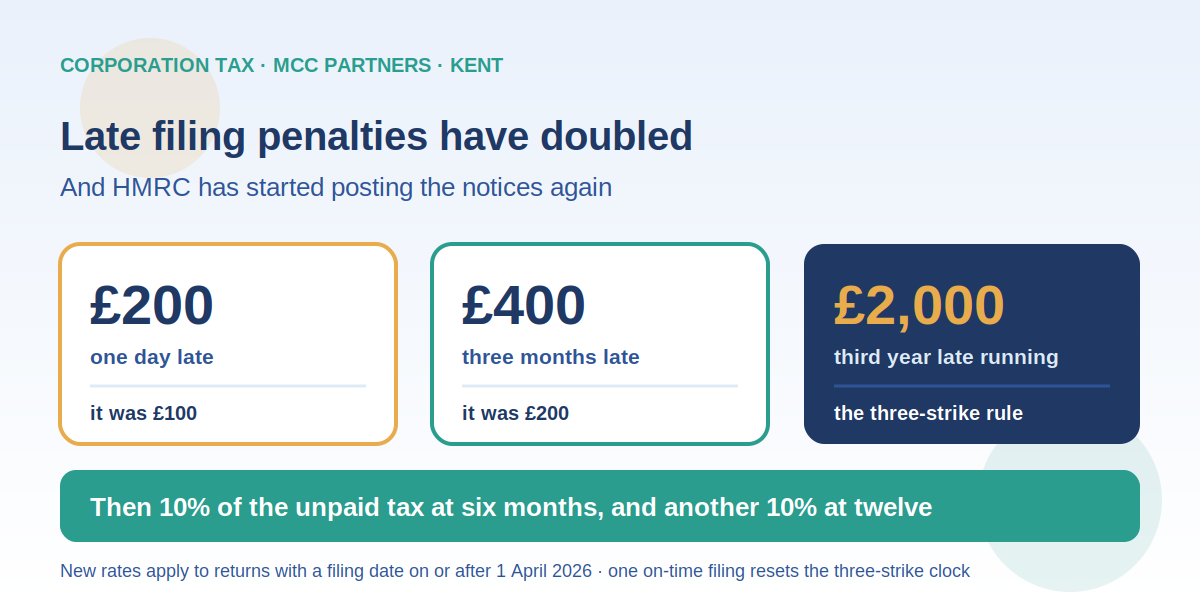
And none of the relaxation touches payment. Late payment still runs at 3% of what’s outstanding at day 15, another 3% at day 30, then interest at 10% a year on a daily basis from day 31. Interest runs from day one of lateness whatever happens.
Landlords, one thing worth checking
If you own property jointly, you don’t have to split out every expense four times a year. There are simplification options for joint owners specifically so you’re not doing that.
Plenty of people are doing it the hard way because nobody told them there was an easier route. If that’s you, it’s a ten minute conversation and it saves you an afternoon a quarter.
The other landlord trap is reconstructing rent from bank statements the week before the deadline. It works, just about, until a tenant pays late or pays two months together and your quarter looks wrong. Record it as it arises.
Construction, a separate warning
Subcontractors over the threshold are in MTD like everyone else, and CIS deductions need to be sitting in your records properly or the year-to-date figures won’t hold up.
Separately, and nothing to do with MTD, HMRC has been writing to contractors about deduction rates applied incorrectly in 2025-26. There’s an online form to report and correct it.
If one of those letters has landed on your desk, send it over. They are much easier to deal with early.
What I’d do this week
Three things.
1. Open your software and look at the year-to-date figures, 6 April to 5 October. Not the quarter. The whole thing. That is what is actually going to HMRC.
2. Fix anything you weren’t happy with in August in the records themselves, then forget about it. It is handled.
3. File by 7 November, or tell us and we’ll do it.
If we do your bookkeeping, this is already in hand and you don’t need to lift a finger.
If you keep your own records and I haven’t heard from you since August, you’re the one I’d like a call from.
My honest view
The cumulative design is the one genuinely sensible thing about MTD. It means a wrong quarter isn’t a crisis, and that takes a lot of fear out of it.
What it doesn’t do is let you off keeping decent records. It just moves the consequence from the quarter you got wrong to the tax return at the end.
Get the bookkeeping right and the four updates become a non-event. That has always been the whole game.

Accountancy, Tax, Law, and so much more Stay Informed!
Subscribe to our Newsletter